Marsha Belle Script: A Font with Personality for Modern Creators
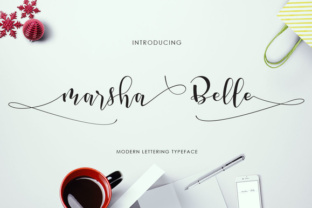
There's a moment in every creative project where you need typography that does more than just sit there. You need letters that move, that breathe, that carry a certain energy across the page. That's exactly what draws people to Marsha Belle Script—a modern lettering typeface with a dancing baseline that brings genuine character to whatever it touches.
Unlike rigid, predictable fonts that feel corporate or sterile, this script typeface has a rhythm built into its DNA. The letters rise and fall naturally, mimicking the organic flow of hand-lettered calligraphy without sacrificing legibility. It's the kind of typeface that makes people pause and look closer, which is precisely what you want when building a brand, designing packaging, or creating marketing materials that need to stand out in crowded spaces.
Where This Script Font Truly Shines
Think about the last time you walked past a bakery with a beautifully hand-lettered sign, or opened a wedding invitation that felt like it was crafted just for you. That emotional response doesn't happen by accident—it comes from typography that connects on a human level. Marsha Belle Script delivers that connection consistently across a surprisingly wide range of applications.
For logo design, this typeface offers something rare: instant personality without the typical script font pitfalls. Many handwritten fonts look great in isolation but fall apart at small sizes or when printed on textured materials. This particular script holds its own because the baseline movement is deliberate rather than chaotic. The dancing quality adds visual interest while maintaining enough structure that your logo remains recognizable whether it's embroidered on a polo shirt, printed on a business card, or displayed as a website header.
Small business owners working on brand identity projects often struggle to find fonts that feel approachable yet professional. A serif font can feel too formal for a boutique or artisan brand. A sans serif might lack warmth. Script fonts bridge that gap beautifully, and Marsha Belle Script does so with a contemporary edge that keeps it from looking dated or overly traditional.
Practical Applications Worth Considering
The versatility of this creative font extends well beyond logos. Here's where designers and creators are finding real value:
- Packaging design benefits enormously from script typography. Whether you're labeling artisan candles, gourmet food products, or handmade cosmetics, the flowing letterforms create an immediate sense of craftsmanship and care.
- Wedding invitations and stationery remain one of the most natural fits. The elegant baseline movement mimics traditional calligraphy at a fraction of the cost and time investment.
- Social media graphics need to grab attention in milliseconds. A bold, expressive script font used for quotes, announcements, or promotional posts creates visual hierarchy that stops the scroll.
- Editorial layouts in magazines and lookbooks use display fonts like this for pull quotes, section headers, and feature titles that guide the reader's eye through the page.
- Merchandise and apparel designers appreciate fonts that translate well to screen printing, embroidery, and heat transfer applications.
- Poster and flyer design for events, sales, and promotions gets an immediate boost when headers use a typeface with built-in movement and energy.
What makes Marsha Belle Script particularly practical is that it was PUA encoded. For anyone unfamiliar, that means every character is accessible through standard software applications, even those with limited font menu options. You won't run into the frustrating situation where special characters or alternates are technically included but impossible to actually use. This matters enormously for crafters working in design software like Silhouette Studio or Cricut Design Space, where PUA encoding can be the difference between a usable font and an expensive mistake.
Pairing Typography for Maximum Impact
One of the most common questions about any script font is simple: what do I pair it with? The dancing baseline of Marsha Belle Script means it naturally commands attention, which makes it an ideal display or headline font. But you'll almost always need a secondary typeface for body text, descriptions, and longer copy.
A clean sans serif font works beautifully as a companion. Think of something like a geometric or humanist sans serif with open letterforms and consistent weight. The contrast between the organic movement of the script and the structured simplicity of the sans serif creates visual tension that feels intentional and polished.
For projects that lean more editorial or upscale, pairing this script with a refined serif font creates an entirely different mood—more magazine, less casual. The key is testing your combinations at actual sizes. A font pairing that looks gorgeous at 72 points on your monitor might become illegible at 14 points in a product description.
Here's practical advice worth remembering: never use two decorative or script fonts together. The visual noise becomes overwhelming, and neither typeface gets the breathing room it needs to do its job. Let Marsha Belle Script be the star of your typography hierarchy, and give it a quiet, confident partner that supports without competing.
Readability and Real-World Performance
Every premium font needs to earn its place in your design toolkit, and that means performing well in real conditions—not just in ideal mockup environments. Consider how your typography will actually be consumed. Will people read it on phone screens? Will it print clearly on recycled cardboard? Does it work at both large and small scales?
Marsha Belle Script excels as a display font, meaning it's built for headlines, titles, logos, and short bursts of text where personality matters more than paragraph-long readability. Using any script typeface for extended body copy is generally a mistake—eyes fatigue quickly when reading flowing, connected letterforms at length. Reserve this font for the moments where you want to make an impression, and use a more neutral typeface for everything else.
Testing is non-negotiable. Before committing to any font for a major project, print samples at the actual size they'll appear. View them on different screens. Ask someone unfamiliar with the project to read the text and tell you what it says. If they hesitate or misread anything, adjust your sizing, spacing, or color contrast accordingly.
Building a Font Library That Works Harder
Whether you're a freelance designer managing multiple client brands, an entrepreneur building your own visual identity, or a content creator producing graphics daily, having reliable design assets saves time and elevates output. A well-chosen script font like Marsha Belle Script becomes one of those go-to resources you reach for repeatedly—not because it fits every project, but because when the right project comes along, nothing else will do.
Before purchasing any commercial font, review the licensing terms carefully. Understand whether the license covers the specific ways you plan to use it—desktop installation, web embedding, digital products for sale, merchandise, and so on. A font that's licensed only for personal use won't help you if you're designing client logos or selling printed goods. Most reputable font foundries and marketplaces make licensing terms transparent, but it's your responsibility to read them.
Look at what's included beyond the basic alphabet. Does the font offer alternate characters, ligatures, or stylistic sets that give you additional creative flexibility? These extras can transform a single typeface into multiple distinct looks, which is especially valuable when you're working across different brands or projects that need variety without sacrificing cohesion.
The best modern typography choices aren't always the trendiest ones—they're the fonts that serve your specific goals, connect with your specific audience, and hold up across the specific applications you need them for. Marsha Belle Script is the kind of typeface that earns its place not through hype, but through consistent, versatile performance across the creative projects that matter most to you.